City of Vancouver
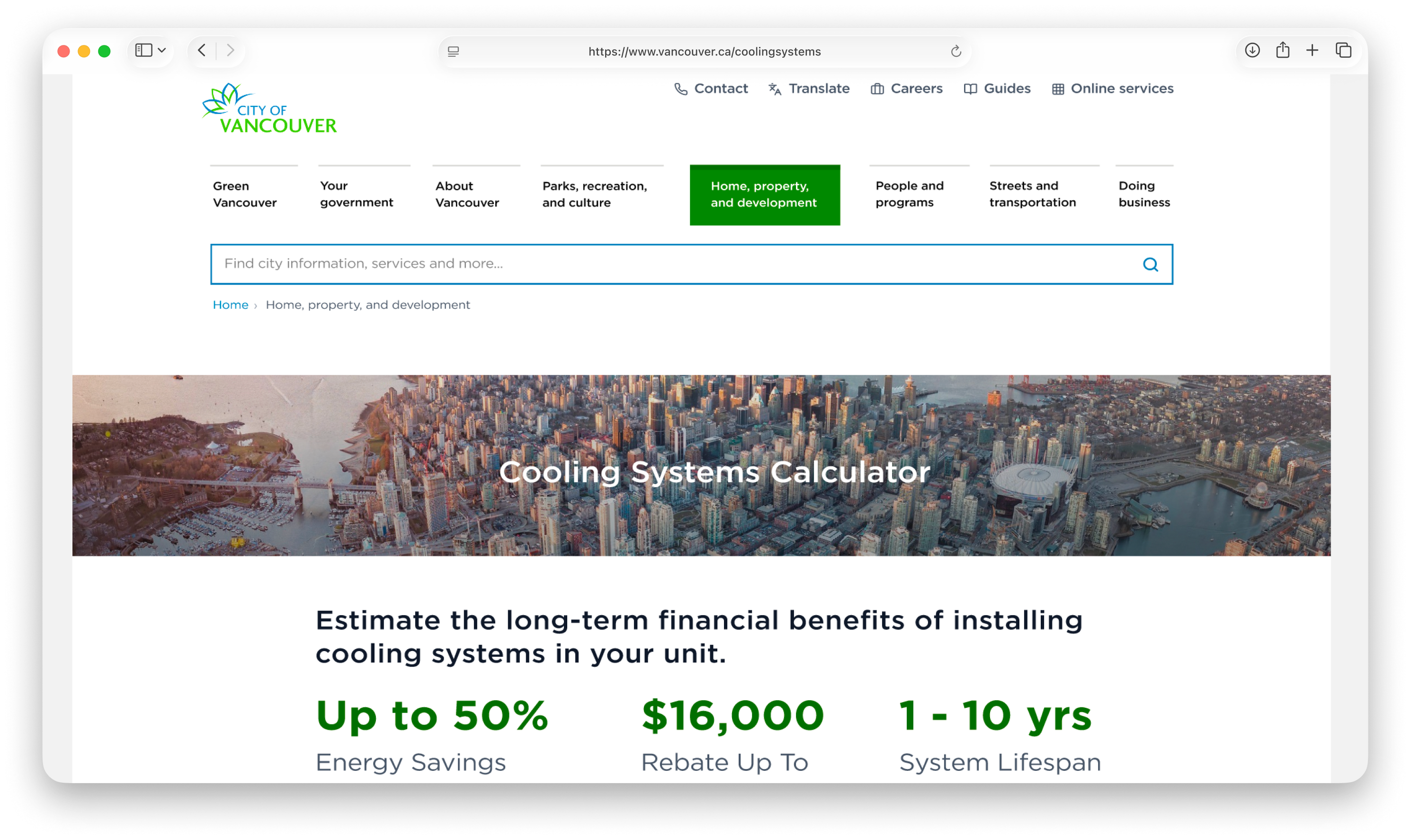
We proposed a Cooling Systems Calculator, an interactive tool that highlights savings, rebates, and long-term value to help landlords view cooling upgrades as a smart investment in the City of Vancouver.
As extreme heat events become more frequent in Vancouver, the tool addresses the lack of incentives that often limits heat preparedness. My role involved supporting research, designing the interface mockups, and developing the interaction design to create an intuitive experience for landlords.
How do existing heat preparedness strategies and constraints influence tenants' ability to prepare for extreme heat in Vancouver?
💬 Understanding the gap
To investigate this question, we conducted semi-structured interviews with nine participants, including both tenants and landlords. Interviews were held either in person or via Zoom. Participants were asked about their experiences preparing for heat waves, communication between tenants and landlords, and responsibility for cooling solutions in rental housing.

"I've experienced a heatwave in the past so I don't really prepare, just react to it when it comes."
Participant 1 — Tenant

"I don't know that landlords have legal responsibilities when it comes to heatwaves as long as units are considered safe and 'livable,' I assume all responsibilities fall on renters."
Participant 2 — Tenant

"Our landlord has explicitly expressed they don't want to put any money into the house."
Participant 3 — Tenant

"I like to not get involved in the tenant's life unless there's something we need to."
Participant 4 — Landlord
These interviews led us to our key insights:
Many participants only take action once they physically experience extreme heat.
Tenants often feel uncomfortable raising concerns about heat due to fears of eviction or unclear responsibilities.
Unlike heating, cooling systems are not required in rental housing, many landlords see little reason to invest in preventative upgrades.
Our research revealed that many landlords do not see cooling upgrades as a clear financial decision. Which led us to explore...
How might we frame heat preparedness as a smart financial investment rather than simply a responsibility?
💡 I Designed a Cooling System Calculator
The calculator helps landlords estimate costs, rebates, and long-term savings for cooling systems, encouraging them to view upgrades as a worthwhile investment.
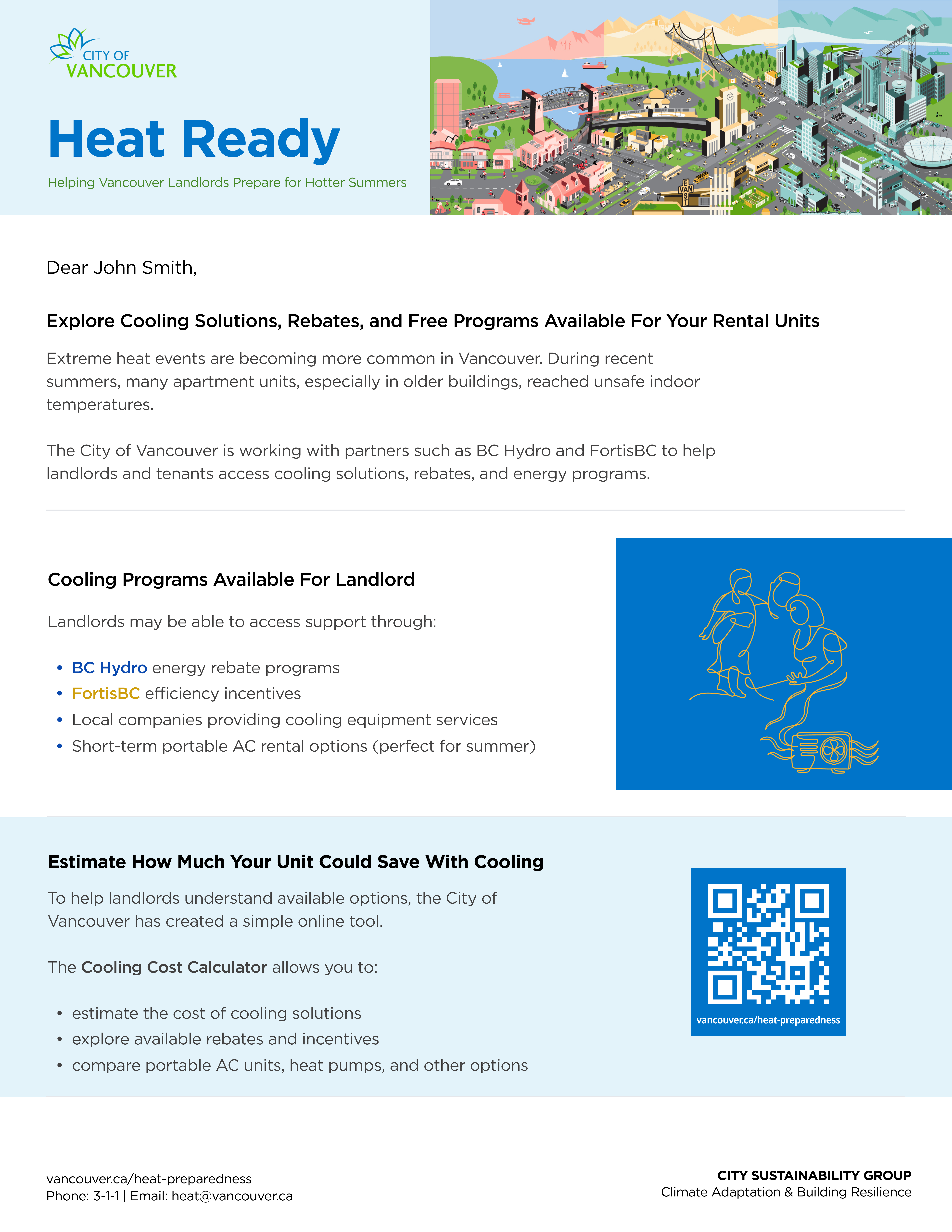
Landlords receive a letter from the City of Vancouver introducing the calculator and highlighting available cooling rebate programs. A QR code directs them to the online tool.

Landlords enter key details about their rental units, such as building type and cooling requirements. The calculator then estimates potential savings.
The tool presents different cooling systems such as ductless mini-split heat pumps, window air conditioning units, and portable AC systems. Each option includes estimated installation costs, energy savings, and rebate opportunities.
Landlords can review additional benefits including their long-term energy savings, climate control improvements, and protection of property value. The tool also links to existing rebate and incentive programs.
The calculator reframes heat preparedness as an investment by highlighting savings and rebates that encourage cooling upgrades.
👩🏻💻 What I've learned
Working on this project made me realize that simply raising awareness isn't enough to change behavior especially when designing for a specific group like landlords. What really makes a difference is showing clear, tangible value. By focusing on things like cost savings, rebates, and long-term benefits, I learned how important it is to frame a solution in a way that feels practical and worthwhile, not just responsible.